The Lead-Scoring System That Bridges Sales & Marketing
Sales says junk. Marketing says hot. They're both right because they never agreed what a lead is. This is the two-score, five-gate system that fixes it.

Sales says junk. Marketing says hot. They're both right — because they never agreed what a lead is. This is the deployed framework, built for a global packaging brand, that finally bridges the two teams.
Two Scores, Not One
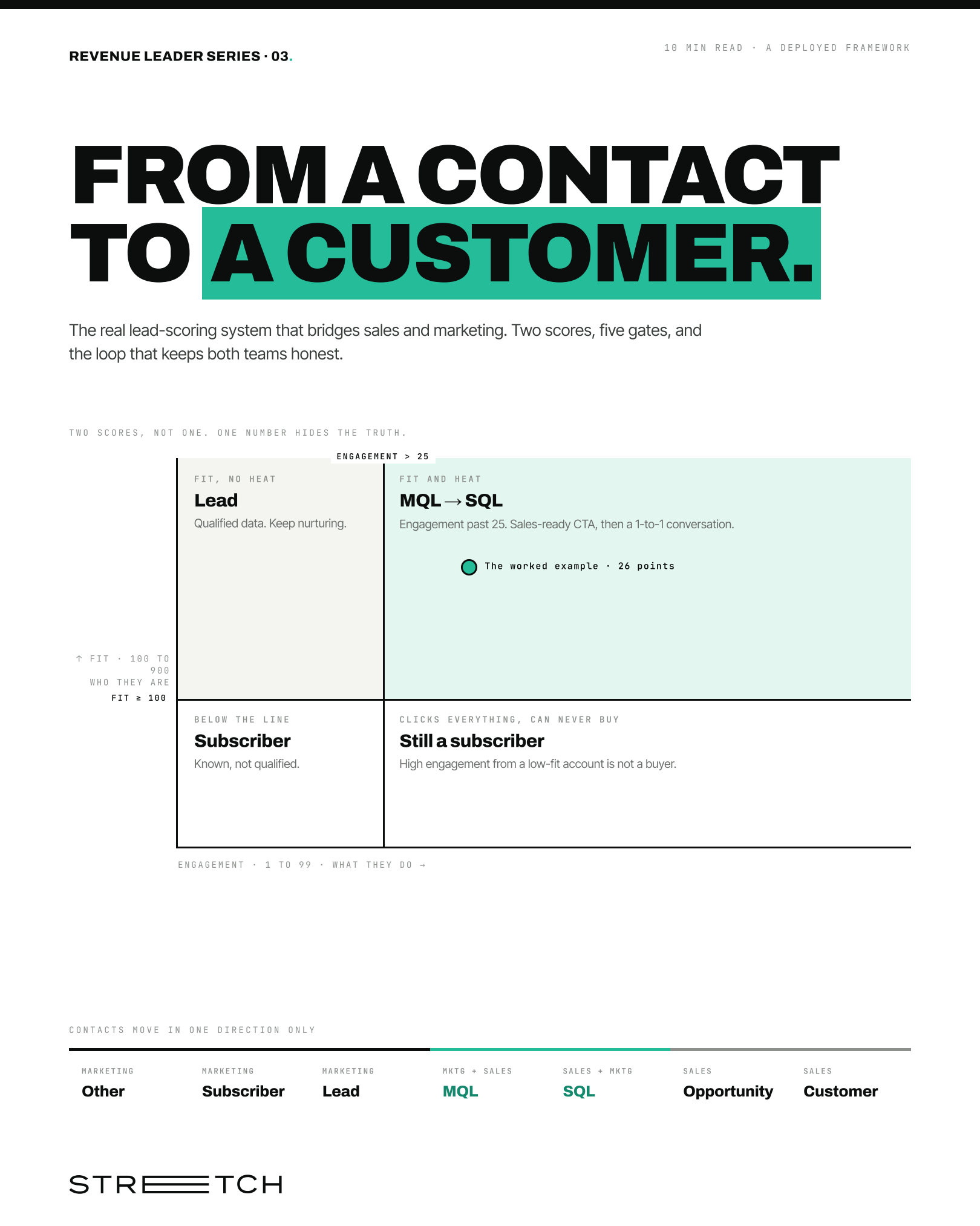
Most systems collapse fit and engagement into a single number — and that's where leads go wrong. A contact who clicks everything but can never buy looks identical to your best prospect. This framework keeps them separate:
- Fit (100–900): Who they are — industry, company size, region, product interest. Decides if sales should pursue at all.
- Engagement (1–99): What they do — page views, email clicks, event attendance, form fills. Decides when and who first.
Five Gates, No Judgement Calls
Every lifecycle stage — Subscriber, Lead, MQL, SQL, Opportunity, Customer — has a written entry rule, not an opinion. Key thresholds include:
- A contact with no industry score above 100 never becomes a Lead, no matter how engaged.
- An engagement score above 25 triggers MQL and a sales-ready CTA.
- A lead score above 125 (or a sales-ready action) triggers SQL and a one-to-one sales conversation.
The Loop That Keeps Both Teams Honest
There's usually no feedback after a lead is handed to sales — so marketing can't optimise, and sales walks in blind. This system closes that loop:
- Marketing → Sales: lead quality score, engagement data, product interests, sales-ready signals.
- Sales → Marketing: new deals, call outcomes, what closed and what didn't.
A 10-Point Self-Check
The guide includes a scored diagnostic — 10 yes/no questions that reveal whether you have a real system or just a lead list. Score 0–3? Start with the two scores and the gates. Score 4–7? The loop is missing. Score 8–10? Time to calibrate on your own closed-won data.
Download the full guide for the exact point values, all seven qualifier rules, stage-by-stage gate logic, and the data loop diagram.