The 5 Truths of Jürgen Ingels: Building, Buying and Selling Companies
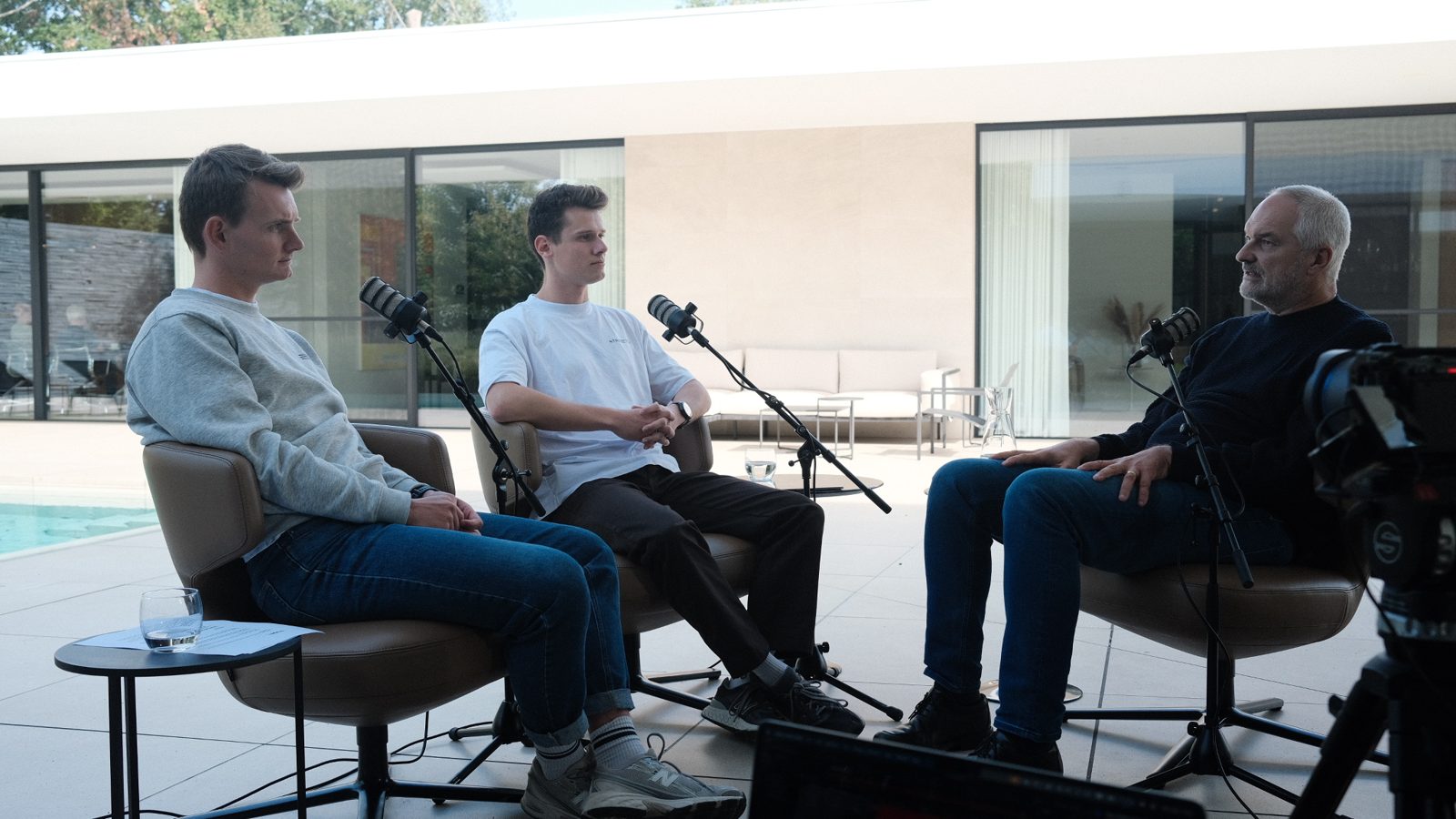
With Jürgen Ingels, Founding Partner and Chairman of Smartfin. Hosted by Stijn Van Daele and Jeroen De Broyer.
Jürgen Ingels, founding partner of Smartfin and co-founder of Clear2Pay, shares five lessons on building, buying and selling companies: make sales part of the growth engine, do not be soft on talent, enter new markets by acquiring small companies, judge a deal commercially and not only by the spreadsheet, and build as if you sell tomorrow.
Jürgen Ingels is one of the best-known fintech entrepreneurs and venture investors in Flanders. He co-founded and was CFO of Clear2Pay, a payments technology company that grew into an international group with around twenty offices and was sold to FIS in 2014. Today he is founding partner and chairman of Smartfin, a Benelux fund that invests in growth companies. Few people know growth from both sides, as a builder and as an investor.
In this conversation he looks at growth through the commercial lens: how to win the first customers without references, when a founder should hand over sales, why commercial due diligence is rarely done, and what he checks in a company before he invests.
This episode is spoken in Dutch. The summary and quotes below are our own English version of what was said.
Key lessons
Credibility comes first, and references create it
With no references and a product that only half worked, Clear2Pay approached a handful of the most technology-forward banks in the world and offered to test the software in their environment for a year at no cost. Three of the four said yes. Their own engineers helped improve it, the banks started to earn money with it, and they did not want it back. Giving something away to earn references, and using those references to win the next customers, is a strategy he still recommends.
Use your best customers, and keep selling to them
Ingels advises setting up a user group with the best customers, meeting once or twice a year, and using their input for product and research. It is much harder to find a new customer than to sell more to an existing one, yet many organisations forget that they have customers once the sale is done and operations takes over.
In the first years, the CEO is the best salesperson
In the first two or three years the founder or CEO should be the best seller. As the company grows, the requirements change. The trigger to bring in one or two experienced sales people is when customers outside your own network start buying. Hand-over is difficult, because a passionate founder sells better than a salesperson who first asks what the commission is.
Enter new countries by acquiring small local companies
Instead of opening offices abroad, he often buys a very small company in the target country whose customers are also potential customers. You win twice: the sales cycle at a bank can drop from about twelve months to six or seven because the local team knows the culture, and the acquired product can be sold through the rest of the group. He pays a small part in cash and the rest in shares, and he advises Belgian companies to dare to do this earlier.
Metrics are not static, and culture differs per country
Statistics from one market do not simply carry over to another. What works in West Flanders does not necessarily work in Antwerp, and what works in Belgium does not work in France. The way of negotiating and how customers value software differ, so he stays careful with models. Output also depends on the person: motivated, passionate sales people deliver very different results at the same cost.
Do not be too soft on talent
He argues Belgian companies are too tolerant and wait too long. Letting the weakest five percent go each year raises the quality of the whole team and keeps the others sharp. He wants the best people even when they cost more, with no compromise for acquaintances who are not good enough.
Look for a must-have problem, not a nice-to-have
Too many companies solve nice-to-have problems. He suggests looking for a must-have problem and building with a small team of the best people. He describes small, highly automated and quickly profitable "mushroom companies" that need much less capital because they use their own profit to fund growth.
Judge a deal commercially, not only through the spreadsheet
When he invests, he looks first at the team and then at the ability to grow, with valuation as secondary. Commercial due diligence is hardly ever done, he says, because private equity grew out of finance. He wants investors to call existing customers, ask whether they would still buy at double the price, and test whether the sales infrastructure can really take a company from ten customers to twenty.
Plans always take longer and cost more
Entrepreneurs have to be optimistic, but in his experience it always takes longer and costs more. His rule of thumb is to shift the revenue line by two quarters and add 30 percent to costs, and the cash need is about right. He also warns that projections are made for the capital raise and not for reality, with the hockey stick starting exactly when the money is raised, and that a headline valuation says little without looking at liquidation preferences.
Build as if you sell tomorrow, and keep sales connected to R&D
A well-structured company with clean data and a tidy back office always gets a better price. He also says the commercial island is over: sales has to be embedded in the company, and what it learns about customers, competitors and price must flow directly to R&D and operations. Even a question about commissions four years ago tells him how fast a company can bring information to the surface.
In his words
Short quotes, translated from Dutch. Times are approximate.
In the first two or three years of your company, your CEO should actually be a salesperson. A CEO who does not sell is not good.
Jürgen Ingels, around 20:30
Valuation is important, but it is much less important than the growth factor.
Jürgen Ingels, around 27:30
Commercial excellence is convincing the customer that he needs your product while he does not realise it himself.
Jürgen Ingels, around 1:02:30
Chapters
- 1:00 Who Jürgen is: from Clear2Pay to Smartfin
- 3:00 Winning the first bank customers without references
- 6:00 References and credibility: when customers cannot let go
- 8:00 Co-creation and user groups
- 10:00 Building the sales team and going international
- 11:00 Years of losses and giving a company time
- 12:00 Growing internationally through small acquisitions
- 16:00 Metrics are not static, and culture differs per country
- 18:00 Underperformance and sales talent
- 20:00 When the founder should hand over sales
- 22:00 Growth costs working capital
- 24:00 Must-have problems and "mushroom companies"
- 26:00 What an investor looks at: team and growth, not valuation
- 28:00 Why commercial due diligence is rarely done
- 33:00 Marketing: earning attention with research
- 35:00 The risk of depending on one acquisition channel
- 36:00 Information flow between sales and R&D
- 39:00 Letting the weakest five percent go
- 40:00 Personal branding
- 42:00 Plans always take longer and cost more
- 45:00 Hockey sticks and the valuation trap
- 51:00 How technology changes capital needs
- 59:00 Build as if you sell tomorrow
- 1:02:00 What commercial excellence means
- 1:03:00 The end of the commercial island
- 1:05:00 Hype versus structural growth in space and defence