What does commercial excellence mean? Seven Belgian business leaders answer
We ask every guest of our podcast the same question: what does commercial excellence mean to you? Seven founders and CEOs answered. Here is what they said, what they agree on, and how to test your own company.

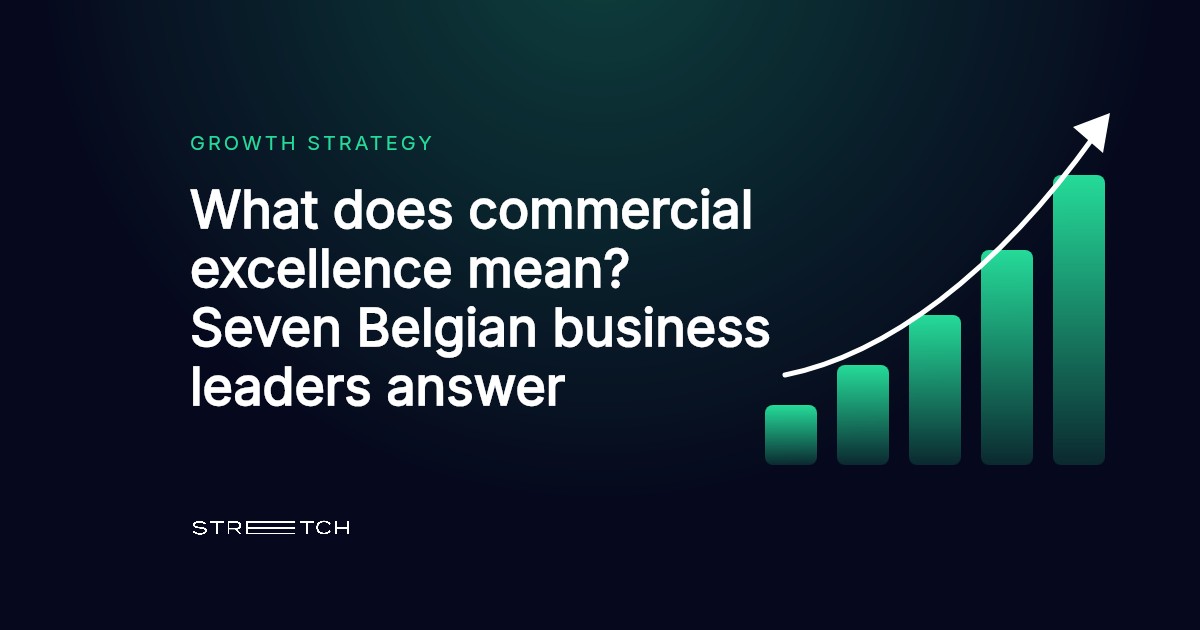
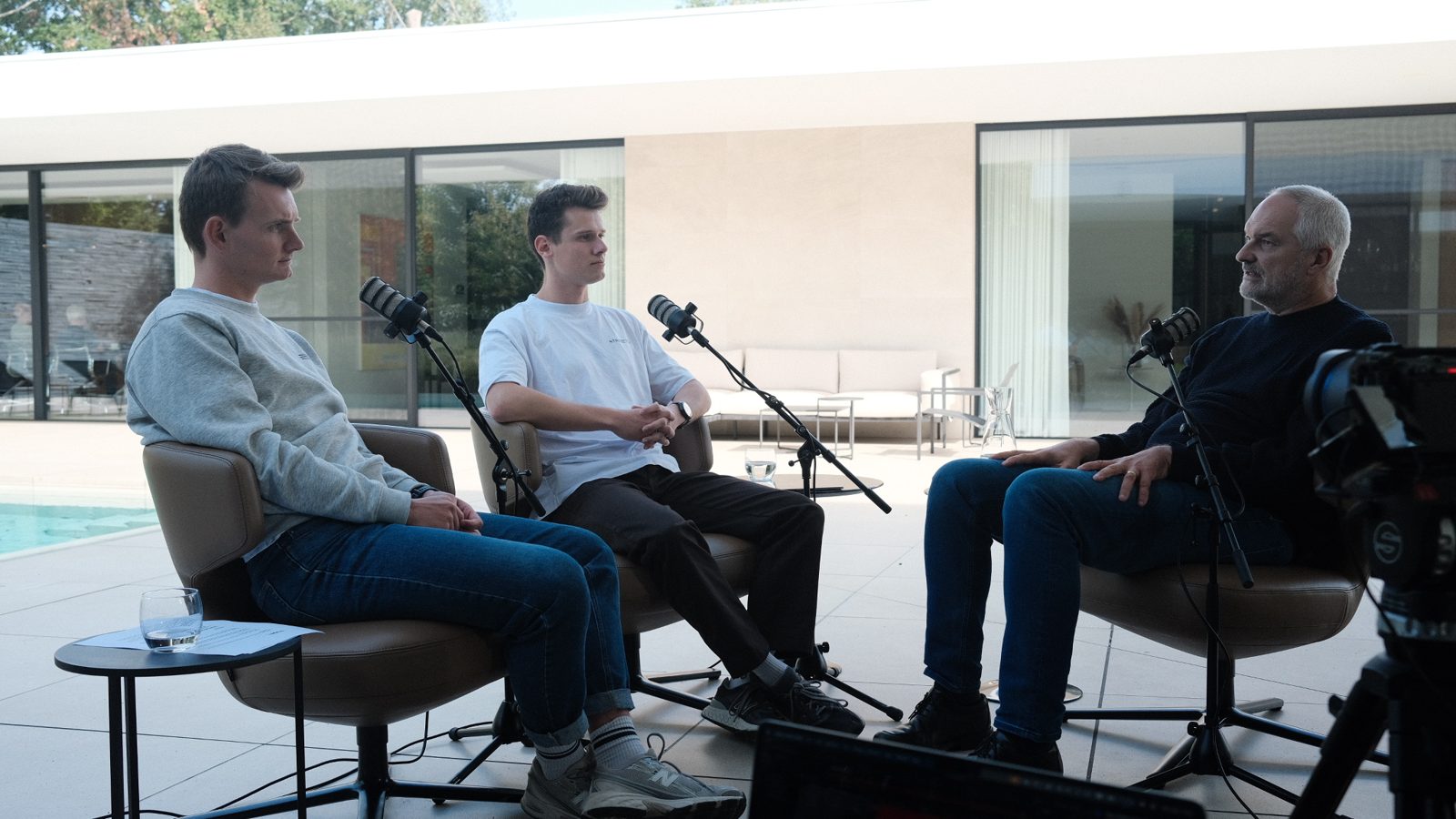
“Commercial excellence” is a phrase everyone uses and few define. In our podcast, Inside the Growth Engine, we ask every guest the same question: what does commercial excellence mean to you, in your own words? We have now asked seven founders and CEOs of Belgian companies, from a hospitality software unicorn to a family-owned crop protection company.
Short answer: There is no single definition, but the answers agree on more than they differ. Commercial excellence means creating value for customers in a way that is consistent, measurable and honest, with sales connected to the rest of the company. It is less a tool or a process than a habit: you do it every week, you can show it in numbers, and customers would confirm it.
What seven leaders said
| Leader | In their own words, in short | Hear it |
|---|---|---|
| Daan De Wever, co-founder and CEO of Dstny | Creating value consistently and systematically for customers and other stakeholders. It is not a tool and not a process. | Episode, around 2:00 |
| Els Paesmans, co-founder and CEO of Globachem | Being a reliable partner: on time, good quality, open about problems and professional with complaints. Flexibility and speed set it apart from multinationals. | Episode, around 2:00 |
| Ben Swerts, regional director at Soudal | Achieving results in an honest way, so that the customer feels helped and you keep the human side. | Episode, around 10:30 |
| Jürgen Ingels, founding partner of Smartfin | Convincing the customer that they need your product when they do not realise it themselves. | Episode, around 1:02:00 |
| Steve Declercq, co-founder of Bizzy | It starts with your own outreach and a good first conversation, and it does not end when the licence is sold. | Episode, around 5:00 |
| Thomas Van Eeckhout, co-CEO of Easi | Sales is strategic, and you should not scale it before positioning and the ideal customer are clear. | Episode, around 10:00 |
| Jan Hollez, co-founder of Posios and Deliverect | A data-driven sales machine in which product, marketing, leads and consultative sales run as one flow, tracked on dashboards. | Episode, around 10:00 |
Three of the leaders put it in a sentence worth keeping. De Wever said: “Commercial excellence is consistently, continuously and systematically creating value, for your customers and for your other stakeholders.” Ingels said it is “convincing the customer that he needs your product while he does not realise it himself”. And Paesmans, describing what reliability means in her sector: “If a product has to be applied before the beets emerge, you cannot come a week later.” (Quotes are translated from Dutch and approximate.)
Five things the answers have in common
1. They start from the customer’s real situation
Swerts, Paesmans, Declercq and Van Eeckhout all define excellence from the customer’s side: is the customer helped, served on time, supported after the sale and happy with what they bought? Nobody defined it as a sales technique.
2. They value consistency over heroics
De Wever puts consistency in the definition itself. Others show it in how they run their teams: a steady rhythm of activity, targets that do not change every year and follow-up without micromanagement. A great month matters less than a system that delivers every month.
3. They measure it
Hollez described dashboards on the number of locations, revenue per customer, how fast customers go live and how happy they are. De Wever follows customer acquisition cost and lifetime value. Paesmans links forecasts to weather and to products that will be banned. The common point is that excellence you cannot see in numbers is hard to manage.
4. Sales is not an island
Ingels said it plainly: the commercial island is over. What sales learns from customers and competitors should flow straight to product, R&D and operations. Paesmans builds this into a process that runs from the first idea to commercialisation.
5. Human contact keeps its place
Even in technology companies, several leaders argued that the human side matters more as tools improve. Swerts warned that removing it would be a mistake, and Van Eeckhout visits customers on site, with the engineers, instead of holding a thirty-minute online call.
Where the answers differ
The definitions are shaped by the business. Paesmans sells to farmers through distributors, where timing and registrations decide everything, so reliability comes first. De Wever runs a technology company that grew through acquisitions, so data and consistency come first. Ingels is an investor, so he looks at it from the outside. A useful definition for your company probably starts from what your customers value most.
A quick test for your own company
If you want to check where you stand, ask these six questions:
- Can you say in one sentence what value you create, and for which customer?
- Do you do the work behind it every week, or only when the quarter closes?
- Which three numbers do you follow, and does everyone read them the same way?
- Do customer insights reach product and delivery within days?
- Where do your customers meet a human being, and does it matter to them?
- Would a customer say you deliver what you promised?
Gaps in these questions usually point to one bottleneck. At Stretch, we use the Commercial Maturity Journey for this, a five-stage diagnostic that points to the one bottleneck holding growth back. You can start with the bottleneck quiz, or look at the Growth Audit if you want an outside view.
Where to go next
If you want the full conversations, all seven are on our podcast page, each with a summary, key lessons and chapters. For related reading, see how to get more revenue from the leads you already have, marketing and sales alignment and what is RevOps.