
What the engine delivered
The challenge
A renowned Belgian brewery with no webshop and a mainly B2B focus needed to establish a direct-to-consumer digital revenue stream. The Belgian beverage market is highly competitive, and the brand also faced stock shortages and operational bottlenecks that complicated scaling. Their core objective was to build a scalable, replicable DTC channel and identify which products resonated best with online buyers.
Our approach
- We started with an audit of existing infrastructure and the competitive landscape, then defined a roadmap of growth experiments for the first three months. In Phase 1, we tested different products to find what resonated online, using an engagement snowball technique (shared Post IDs across ad sets) to lower CPMs and boost social proof. In Phase 2, we introduced a scarcity-driven product drop strategy — borrowed from the fashion industry — combined with a pre-sale lead generation campaign: a €1,843 ad budget generated 2,500+ leads, nurtured through a structured email sequence before the live launch.
The result
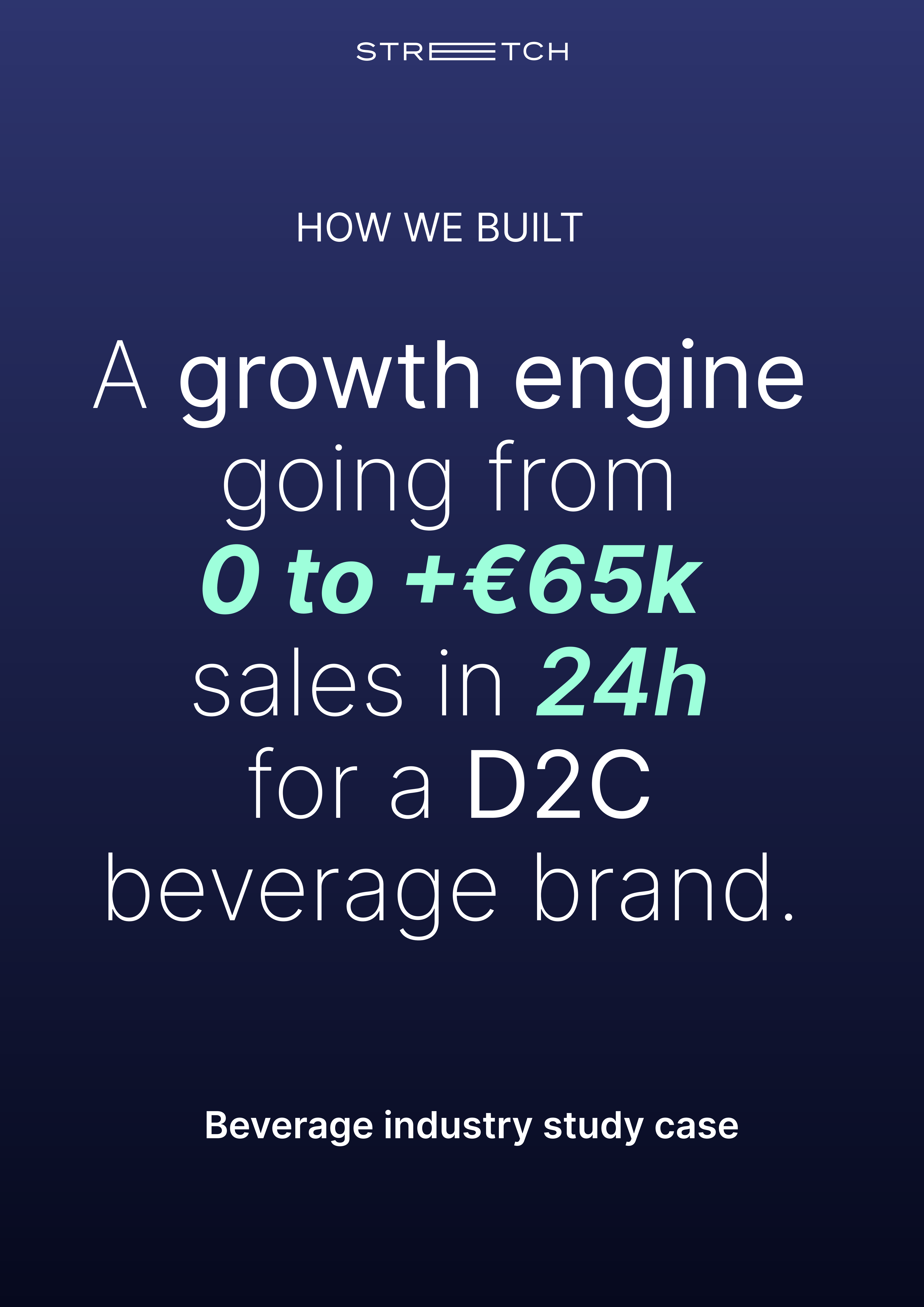
The product drop sold 876 units in the first 24 hours at €80 each, generating over €65,000 in revenue with a cost per sale of just €2.10 and a lead conversion rate of 34%. Scarcity, exclusivity, and urgency proved to be the key conversion drivers, with average order values significantly higher for limited-edition products. The brand now has a proven, repeatable playbook for product drops and a growing CRM asset for retargeting and lookalike audiences.
By shifting from traditional retail thinking to a direct-to-consumer digital approach, this brand unlocked a new revenue stream. With a proven playbook for product drops, they are now positioned for scalable, long-term success in online sales.
Want the full case study?
Download the complete version including methodology, experiment details and full results.